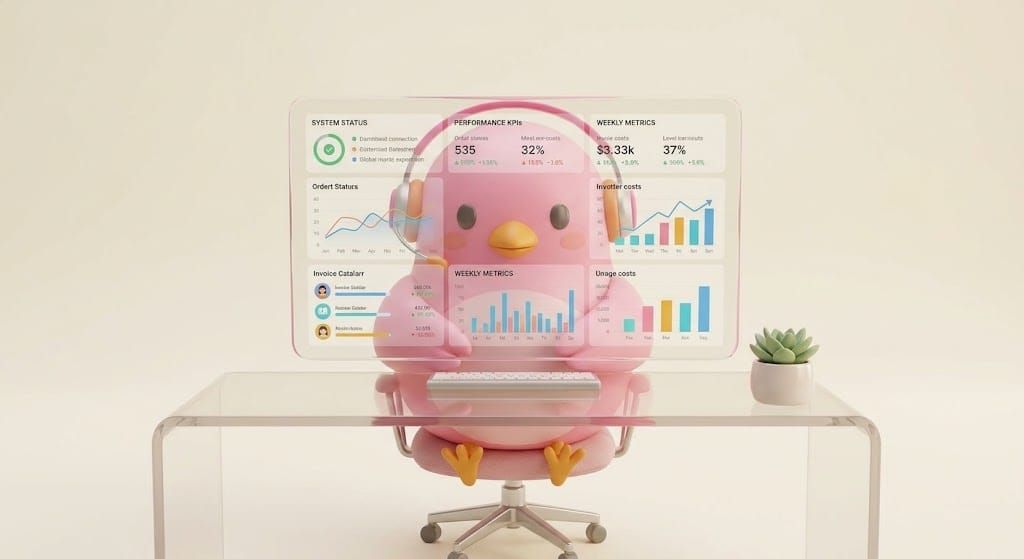
AI coworkers become much more valuable when they do not operate in isolation.
On their own, an AI coworker can help execute tasks. It can follow up with a customer, prepare a quotation, update a CRM record or remind someone about an outstanding action. But the quality of those actions depends on the quality of the context behind them. That is why we think the business suite, business intelligence and AI coworkers belong together.
The business suite gives Cadr the operating context of the company. It connects the systems where the business actually runs, including CRM, ERP, email, documents and internal workflows. That creates a structured view of customers, opportunities, orders, pricing, margins, inventory, delivery timelines and operational activity. The intelligence layer then turns that information into understanding.
It can identify where sales are slowing, which customer segments are converting, which quotations are getting stuck, where margins are deteriorating, where production costs are rising or where a customer relationship is becoming less active. The coworker can then act on that intelligence.
If Cadr identifies that a high value prospect has not responded after a quotation, the sales coworker can prepare the appropriate follow up according to company policy. If a customer has historically reordered every eight weeks and has suddenly gone quiet, the account coworker can flag the change and prepare outreach. If ERP data shows that a particular product line is consistently generating lower margins, management can see it in the dashboard while the relevant teams receive the information they need to investigate.
This is very different from simply connecting an AI model to a company's inbox. The opportunity is in creating a closed loop between information, intelligence and execution. The business suite provides the information. The intelligence layer identifies what matters. The AI coworkers help execute the response.
Each layer also improves the others. The more work the coworkers perform, the more structured information is captured across the business. Better information creates better analytics. Better analytics gives the coworkers better context for their next actions.
Over time, the company develops something closer to an institutional memory of how the business operates.
A salesperson does not need to remember every conversation with every customer. A manager does not need to manually reconcile CRM data with ERP reports. A CEO does not need to wait for a monthly management report to understand that conversion has declined or costs are moving in the wrong direction.
The intelligence is continuously available, and the coworkers are operating against the same underlying view of the company. That is why we do not see Cadr as a collection of independent AI agents. The more important product is the intelligence layer connecting the company, its data and the people working inside it.
AI coworkers are ultimately only as good as what they understand. Give them access to the right business context, clear rules and a continuously improving intelligence layer, and they move from being useful assistants to becoming part of how the company actually operates.